

Canada
ICMP has engaged with Crown-Indigenous Relations and Northern Affairs Canada (CIRNAC) since December 2021 to assist in implementing a National Strategy for the Identification and Repatriation of Human Remains of Canadian Indigenous – First Nations, Inuit and Metis – persons presumed to be in unmarked and clandestine gravesites at and around Residential Schools and other locations. In February 2023, ICMP and CIRNAC signed a Technical Arrangement (TA) formalizing their cooperation in this endeavor.
Thousands of Indigenous children died while attending Residential Schools and were often buried in unofficial cemeteries or unmarked burial sites associated with the school, or in local church graveyards or municipal cemeteries that were a long distance from their home communities. Frequently, families were not notified of sickness, death, or burial location. The number of burial sites is not known, as recording and reporting of deaths and burials was often neglected or inconsistent, or minimal information was provided. Many sites were not marked, and have since been abandoned or significantly disturbed.
In July 2021, the Assembly of First Nations adopted Resolution no. 02/2021, in which they committed to work with all First Nations in Canada to support the investigation of former Indian Residential School sites; support archeological investigations, and document research and other investigation methods; seek justice at the International Criminal Court; and “formally invite ICMP to work with First Nations”.

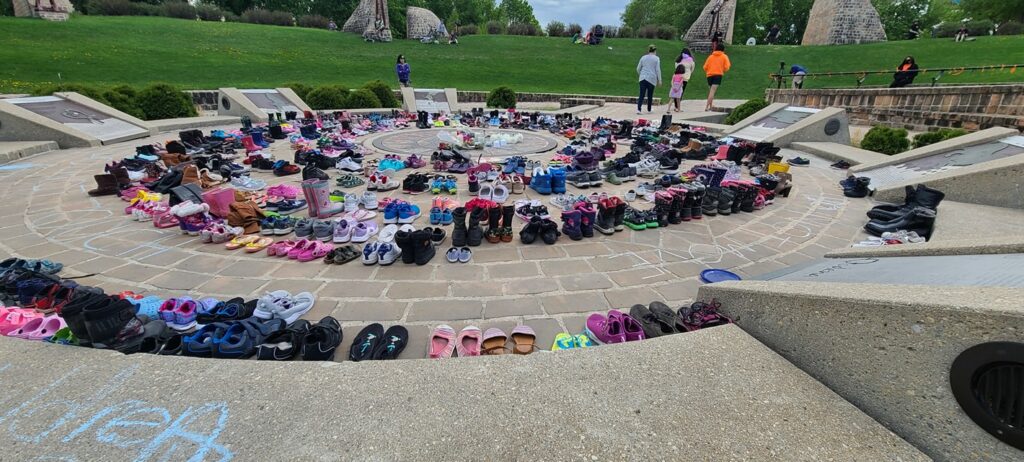
Indigenous communities across Canada have conducted archaeological work to investigate sites near former residential schools. Some communities have found early indicators of unmarked graves at these sites. Several communities are seeking assistance for the identification of family members through the analysis of human remains, and specifically through the use of DNA. There is a need for a coherent approach to identification and repatriation so that requests from Indigenous communities can be addressed in a clear, equitable, efficient and cohesive manner.
ICMP began a consultation process with indigenous leaders to evaluate the best way to provide support. In January 2023, following more than a year of detailed discussions, a Technical Arrangement (TA) was signed between ICMP and the Crown Indigenous Relations and Northern Affairs Canada (CIRNAC), the federal government department responsible for meeting Canada’s obligations to First Nations, Inuit and Métis communities.
The purpose of ICMP´s Canada Program is to engage with Indigenous communities to explore options for addressing the issue of unmarked burials and potential repatriation of children’s remains, considering that the needs of each community will be unique to their culture and tradition.
The outcome will be an ICMP report and recommendations to help the Government of Canada to develop a national strategy to identify and repatriate victims, taking into consideration community needs and the potential for a program of DNA analysis.


